By Posture Reminder AI
Published by Posture Reminder AI
Tennis Elbow From Using a Mouse: Ease Outer Elbow Pain at Your Desk
Tennis elbow sounds like a sports injury, but plenty of people get it without a racket. The NHS lists computer work, including typing and using a mouse, among the repeated activities that can cause it. Recent r/RSI posts describe the same problem: pain along the top of the forearm from the elbow after a computer-heavy job, forearm tendon pain blamed on the mouse , and elbow pain while using a PC and mouse .
Quick summary
Summarize this blog with AI
Tennis elbow sounds like a sports injury, but plenty of people get it without a racket. The NHS lists computer work, including typing and using a mouse, among the repeated activities that can cause it. Recent r/RSI posts describe the same problem: pain along the top of the forearm from the elbow after a computer-heavy job, forearm tendon pain blamed on the mouse, and elbow pain while using a PC and mouse.
This guide is the outer-elbow companion to our article on inner elbow pain and pinky tingling. It explains how to reduce the load on the outer forearm at your desk and what to expect from recovery. It cannot diagnose your elbow; persistent pain deserves an examination.
Outer elbow, inner elbow or nerve symptoms?
Where the symptoms are and how they feel points you to the right guidance.
| Pattern | Often described as | Where to start |
|---|---|---|
| Pain on the outside of the elbow, sometimes spreading into the forearm, worse with gripping, lifting or twisting | Tennis elbow (lateral elbow pain) | This guide |
| Pain on the inner elbow, or tingling in the ring and little fingers | Inner elbow pain or ulnar nerve irritation | Our inner elbow guide |
| Numbness or tingling in the thumb, index and middle fingers | Often wrist-related nerve symptoms | Our hand numbness guide |
MedlinePlus describes tennis elbow as pain on the outer elbow from small tears in the tendons that attach forearm muscles to the bone, with pain that can spread into the forearm and back of the hand when gripping or twisting, and sometimes a weaker grip. Numbness, pins and needles, or pain that feels deep and burning rather than tender over the bone, can have other causes; mention them to the clinician who examines you.
What mouse work asks of the outer forearm
The muscles that attach at the outer elbow lift the wrist and fingers and help you grip. Mouse use can keep them working for hours in small ways:
- holding the wrist bent upward because the mouse or desk is too high;
- gripping the sides of the mouse harder than needed, especially during precise work;
- keeping fingers lifted and ready above the buttons;
- reaching forward or to the side so the forearm is unsupported.
None of these is dangerous in short bursts. The problem is repetition without enough recovery. MedlinePlus notes that heavy keyboard or mouse use can contribute, and the NHS points to repeated gripping and twisting of the forearm.
Reduce the load before you change devices
These changes cost little and are easy to reverse. Try them for a week before buying hardware.
- Bring the mouse in. Keep it beside the keyboard and close enough that your elbow stays near your side. If a wide keyboard pushes it out, consider a compact keyboard; our mouse shoulder guide shows how reach adds up.
- Support the forearm. Rest the forearm on the desk or an armrest set at desk height, so the outer forearm muscles do not also hold the arm up.
- Lower the hand. A desk or keyboard tray that puts the hand above elbow height tends to bend the wrist up. See our desk-too-high guide.
- Loosen your grip. Rest the hand on the mouse and move it without squeezing. Increasing pointer speed slightly means smaller movements and less dragging.
- Reduce the number of actions. Use shortcuts for frequent commands, and see our guides to reducing clicks and button holds and typing less.
Keep the activities that do not hurt. Complete rest of the whole arm is rarely necessary; the aim is to cut back on what provokes the pain while it settles.
Vertical mouse, trackball or pen tablet?
Other devices change which muscles do the work. They do not remove the work.
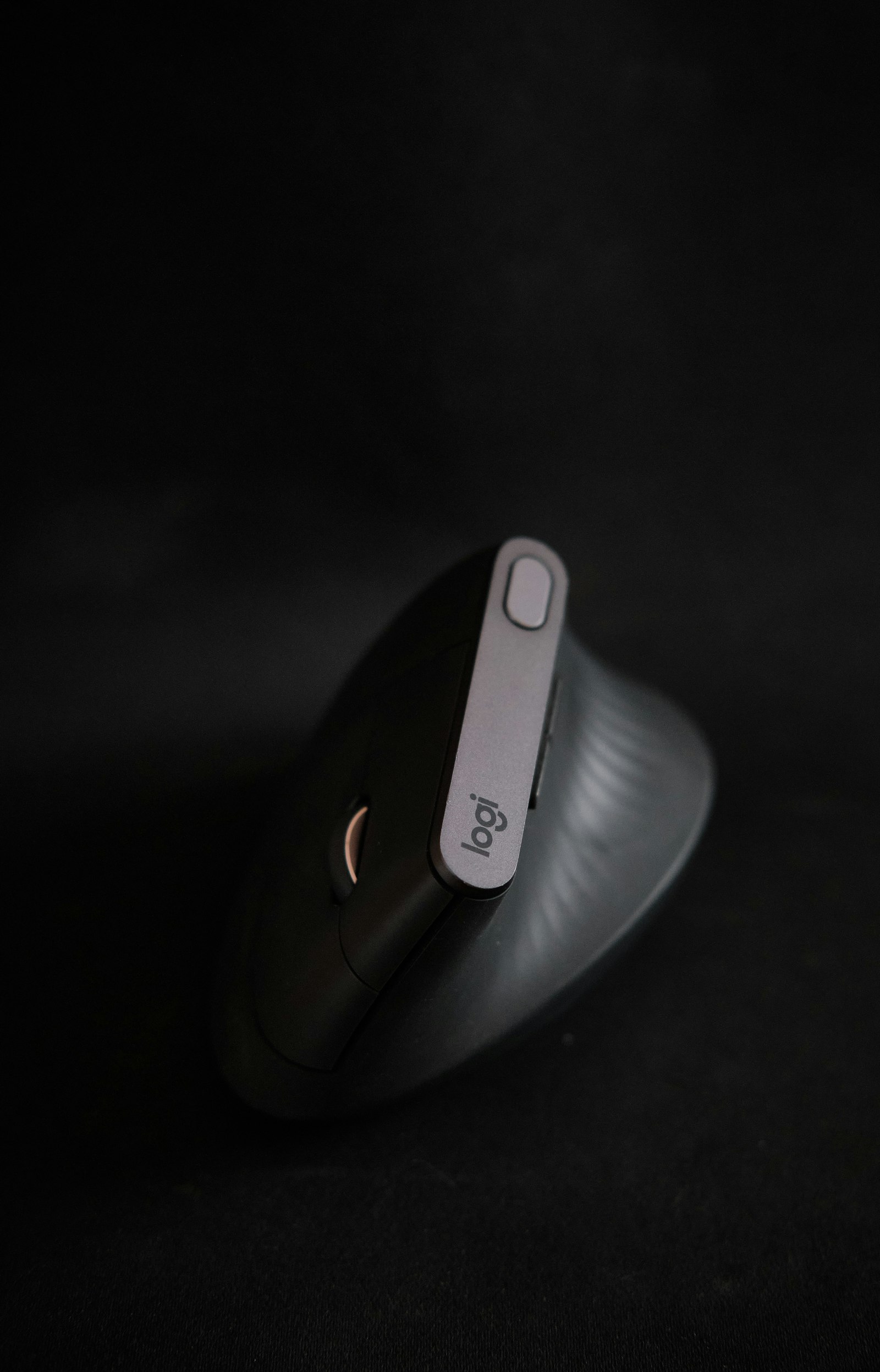
- Vertical mouse: turns the hand toward a handshake position, which some people find eases forearm pain. It can introduce new pressure points or encourage a tight grip; see our vertical mouse setup guide.
- Trackball: the arm stays still, but the thumb or fingers do more. Our trackball thumb guide covers the trade-offs.
- Pen tablet or trackpad: changes the grip entirely and can work well for some tasks, but a pen held tightly can load the same forearm muscles.
Change one thing at a time and give it a week or two. Switching devices every few days makes it impossible to know what helped. For a broader approach, see our guide to fixing the setup before switching mice.
Forearm straps
The NHS lists a forearm strap or elbow brace among self-care options, and MedlinePlus describes a counterforce brace that can reduce strain on the muscles. A strap usually sits on the forearm just below the elbow. It should feel firm, not tight. Remove it if your hand tingles, goes numb or changes color.
Treat a strap as a way to make necessary tasks more comfortable while the tendon settles, not as permission to keep the same mouse workload. If you are also considering wrist bracing for hand symptoms, our wrist brace guide explains why typing in a rigid brace can backfire.
Why setup changes alone may not be enough
A new Cochrane review, published in October 2026, looked at workplace ergonomic changes for treating existing arm, neck and shoulder complaints. Across 20 studies, it found that these changes may make little or no difference to pain compared with no treatment, although the evidence was limited and many studies were small. The review looked at treating existing complaints, not at prevention.
For tennis elbow, that supports a combined approach: use setup changes to reduce the load, and add time and progressive rehabilitation. The NHS suggests physiotherapy if home treatment has not helped after six weeks; it may include stretching and strengthening exercises for the wrist and forearm. If exercises increase your pain, see our guide to scaling exercises down safely and ask your physiotherapist to adjust the plan.
Timeline and when to get help
Tennis elbow usually improves within a few weeks of rest and changes to activity, but it can last longer; the NHS notes it can sometimes last over a year. MedlinePlus reports that most cases improve without surgery.
See a GP or another clinician if pain continues after two weeks of self-care, if you cannot use your arm normally, or if you have numbness, tingling or weakness in the hand. Get prompt care if the pain followed a fall or injury, the elbow is swollen, hot or deformed, you cannot straighten or bend it, or you feel generally unwell or feverish.