By Posture Reminder AI
Published by Posture Reminder AI
Trap Tox for Desk Neck Pain: What It Can and Cannot Fix
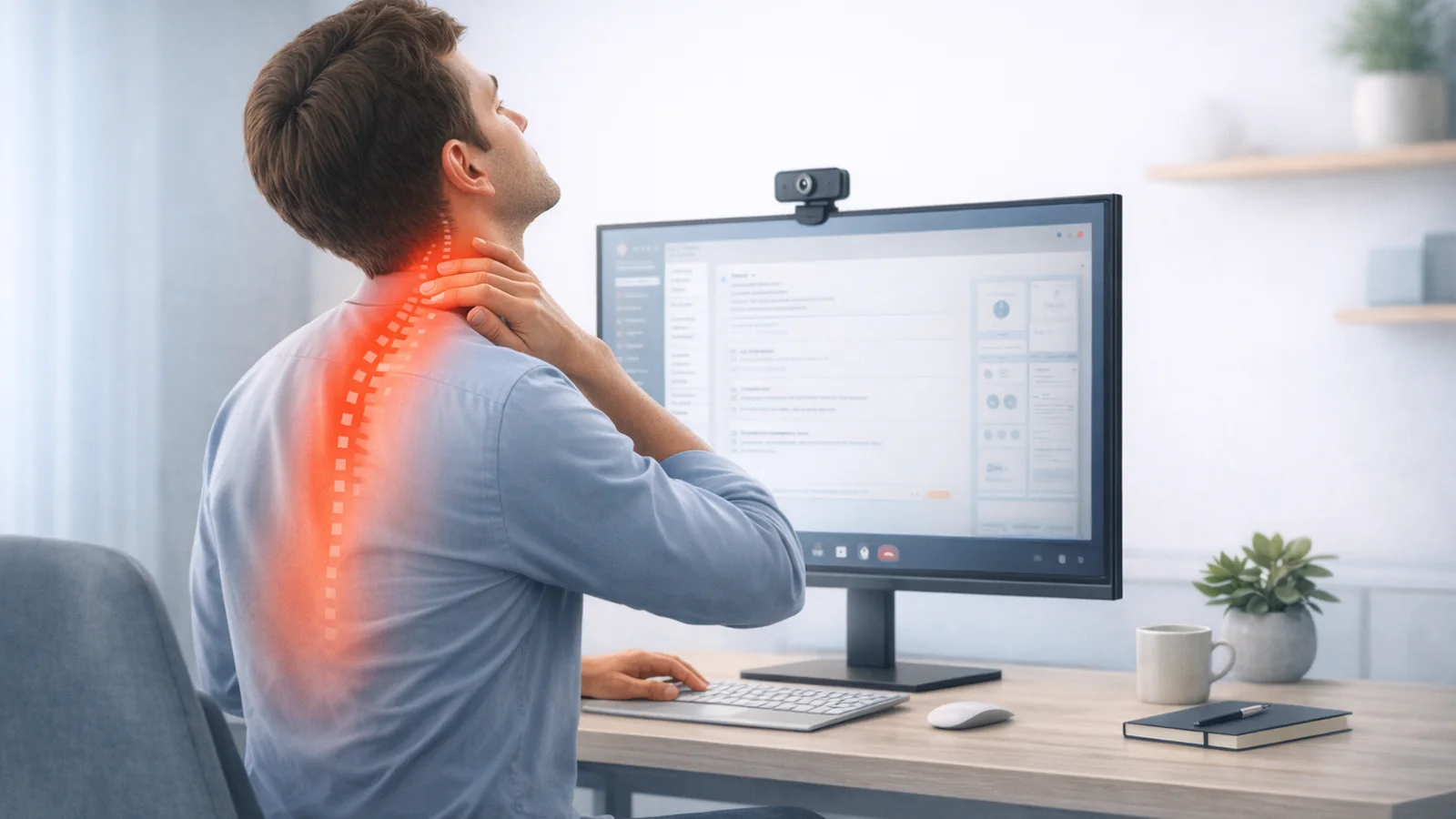
Trap tox for shoulders or desk neck pain sounds appealing because the upper traps are the part people can actually feel. If those muscles are always hard, sore, or visibly overworking in the mirror, relaxing them can sound like the obvious fix.
Quick summary
Summarize this blog with AI
Trap tox for shoulders or desk neck pain sounds appealing because the upper traps are the part people can actually feel. If those muscles are always hard, sore, or visibly overworking in the mirror, relaxing them can sound like the obvious fix.
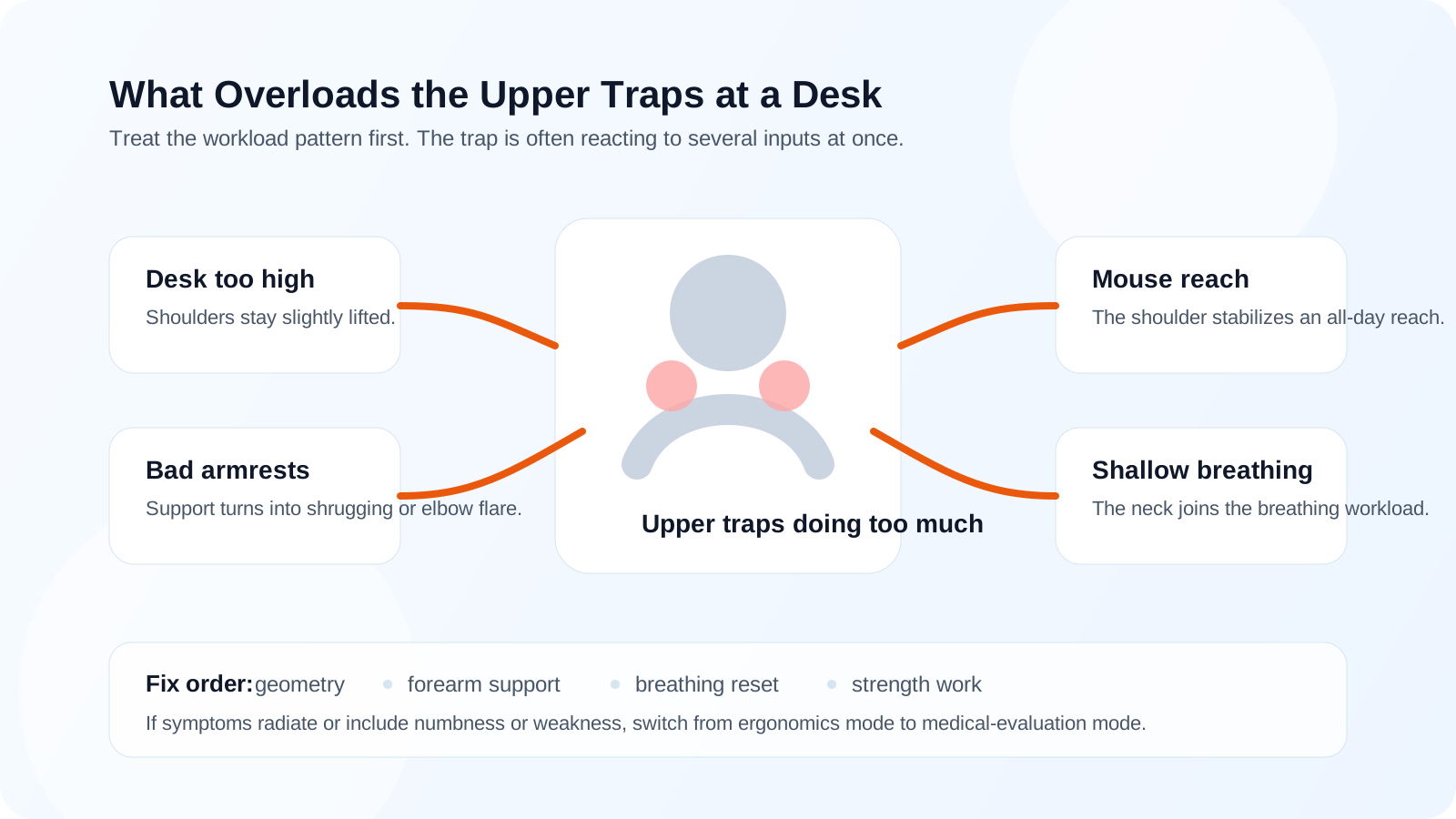
The problem is that desk-related trap pain is usually a load-management problem before it is a trap problem. High work surfaces, unsupported forearms, too much mousing reach, call-heavy days, shallow upper-chest breathing, and stress bracing can all push the upper traps into a rescue role.
That does not make injections irrelevant. It means you should be much more specific about the diagnosis before treating the loudest muscle. The right question is not Can trap tox make the trap quieter. The right question is What condition is actually being treated, and what is making the trap work this hard in the first place.
Before You Escalate
If the shoulders calm down on weekends, vacations, or lower-meeting days, treat the workload pattern as real evidence.
- Fix desk geometry before assuming the muscle itself is the core problem.
- Use diagnosis first, intervention second.
- If symptoms radiate, include numbness, or include weakness, stop treating it like ordinary desk tension.
Key Highlights
- Botox has an established medical role in some conditions, but desk-related upper-trap tightness is not the same thing as cervical dystonia or another formal diagnosis.
- Systematic review evidence for botulinum toxin in chronic non-specific neck pain has not shown a clear, consistent clinically important benefit.
- If symptoms improve sharply on weekends, vacations, or lower-meeting days, daily workload is probably a major driver.
- The highest-yield first moves are better desk geometry, better arm support, lower visual strain, calmer breathing, and stronger scapular support.
Start With Three Questions
- Does the pain drop when you are away from the desk for a day or two?
- Do your shoulders immediately feel better when the keyboard, mouse, or armrests are repositioned?
- Do you have red-flag symptoms such as radiating pain, numbness, weakness, or worsening headaches?
Pattern Table: What Your Symptoms Usually Mean
| Pattern | What it usually suggests | Better next step |
|---|---|---|
| Much better on weekends | Daily workstation load is a major driver. | Reduce shoulder demand before chasing a stronger intervention. |
| Immediate relief when the mouse or keyboard moves closer | Reach and arm support are overloading the shoulder girdle. | Fix geometry and retest over a few workdays. |
| Persistent severe pain with numbness or weakness | This may be more than routine desk tension. | Get medical evaluation instead of more self-experimenting. |
| Only temporary relief from massage | Symptoms are being calmed, but the workload pattern is returning unchanged. | Use massage as symptom relief, not as the whole plan. |
What Trap Tox Is Actually Used For
Current FDA labeling for BOTOX specifically includes cervical dystonia, a neurologic condition involving abnormal head position and neck pain. That is not the same thing as generic desk tightness, upper-trap soreness after computer work, or shoulders that feel permanently shrugged.
That distinction matters because a treatment can be appropriate for one diagnosis and a poor shortcut for another. If someone is thinking about injections, the diagnosis should come first, not last.
What Current Evidence Says About Chronic Neck Pain
A systematic review indexed on PubMed concluded that the evidence failed to confirm a clinically important or statistically significant benefit of botulinum toxin A for chronic neck pain overall. That does not mean no individual ever feels better. It means the evidence base is not strong enough to treat ordinary chronic desk neck pain like an obvious injection problem.
Why Desk Workers Overload the Upper Traps
- The desk is too high, so the shoulders stay slightly elevated for hours.
- The mouse sits too far from the body, so the shoulder stabilizes a reach all day.
- Armrests are too high, too wide, or too far forward, which creates shrugging instead of support.
- The screen or meeting window is poorly placed, so the neck and shoulder girdle stay tense to chase the task.
- Stress or concentration drives constant upper-chest breathing, which keeps the neck and shoulders acting like accessory breathing muscles.
The Better First-Line Plan
| Fix first | Why it matters |
|---|---|
| Desk and input height | If the shoulders must stay slightly lifted, the traps never get off duty. |
| Forearm support | The lower forearm needs support without shrugging or elbow flare. |
| Meeting layout | Call-heavy days often turn ordinary shoulder fatigue into all-day trap guarding. |
| Breathing and reset work | Long exhales and quieter upper-chest breathing reduce neck contribution to every work block. |
| Rows, wall slides, carries | They spread the load across the rest of the system instead of asking one loud muscle to solve everything. |
When Clinician Evaluation Matters More Than Another Desk Fix
AAOS recommends medical evaluation when neck pain is severe, persistent, radiates into the arms or legs, or comes with numbness, tingling, weakness, or headaches. Those are not details to push aside just because the pain seems desk-related on the surface. See the AAOS neck pain overview if you need a plain-language red-flag list.
Related Reading
- Chair Armrests and Shoulder Pain
- Desk Too High? Why Your Shoulders Hurt
- Mouse Shoulder From Desk Work
- Pain Under One Shoulder Blade From Desk Work
Medical Disclaimer
This article is for educational purposes only and is not medical advice. It is not intended to diagnose, treat, cure, or prevent any condition, and it does not replace care from a physician, physical therapist, or other qualified clinician. If you have severe pain, numbness, weakness, dizziness, worsening symptoms, or questions about your specific situation, seek professional medical evaluation.