By Posture Reminder AI
Published by Posture Reminder AI
Neck Hump From Desk Work: What Posture Can Fix and When to See a Doctor
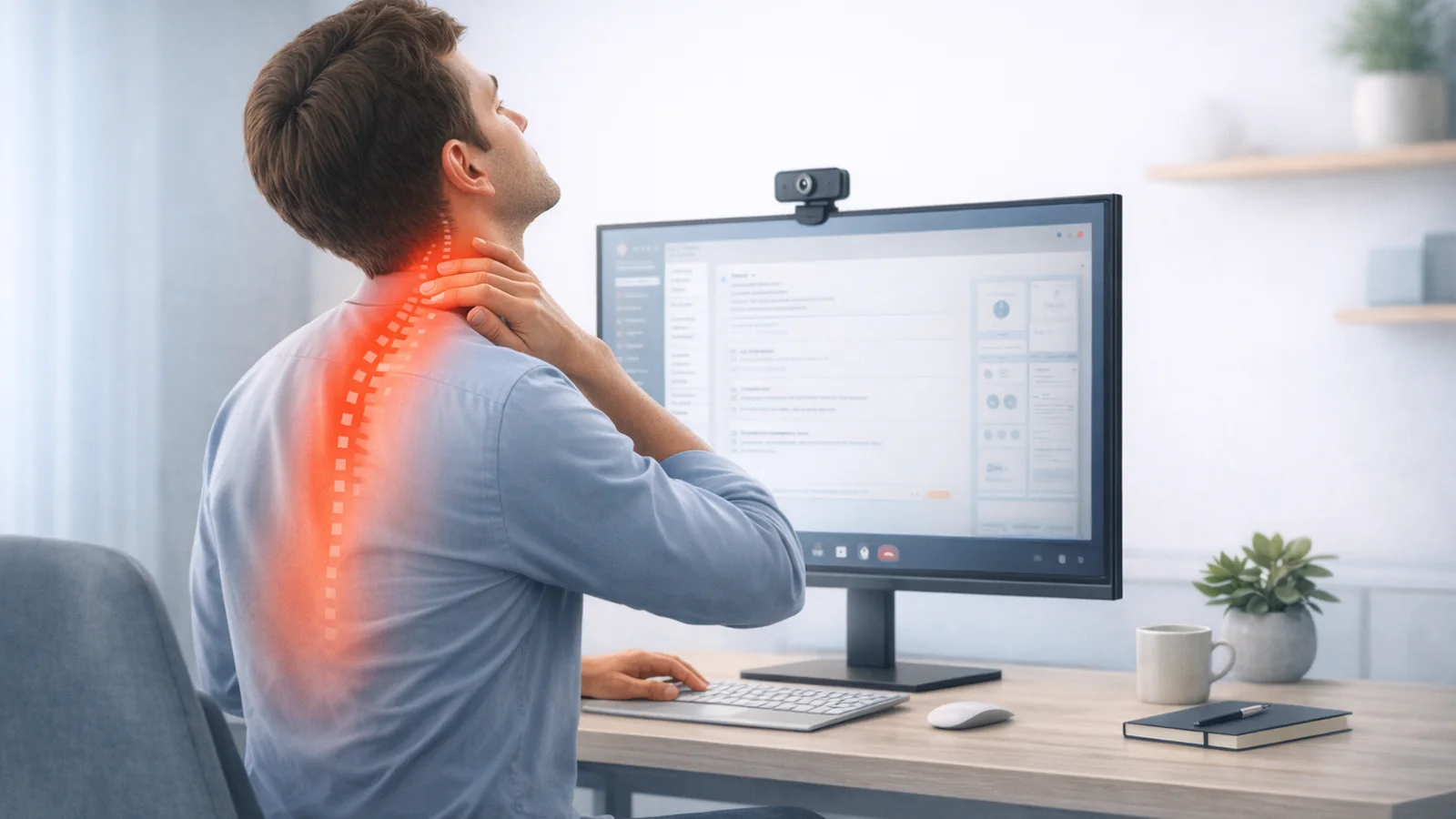
A bump at the base of the neck can be unsettling, especially when it shows up clearly in a side photo. Desk posture can contribute: a low laptop, forward head position, rounded upper back, long driving hours, and phone use can all make the lower neck and upper back look more prominent.
Quick summary
Summarize this blog with AI
A bump at the base of the neck can be unsettling, especially when it shows up clearly in a side photo. Desk posture can contribute: a low laptop, forward head position, rounded upper back, long driving hours, and phone use can all make the lower neck and upper back look more prominent.
But a visible neck hump is not always just posture. It can involve spinal curvature, soft tissue, body composition, medication effects, osteoporosis risk, or other medical causes. That is why the safest advice separates what desk habits can improve from what needs clinical evaluation.
You can work on the posture pattern while staying honest about limits. Improve the screen setup, restore upper-back movement, strengthen the shoulders and upper back, and know which changes should be checked by a professional.
Key Highlights
- A neck hump may reflect forward head posture and upper-back rounding, but non-postural causes are possible.
- Rapid change, significant pain, neurologic symptoms, steroid medication use, or osteoporosis risk deserve medical evaluation.
- Forcing the head back all day usually creates tension instead of lasting change.
- The useful plan targets screen height, screen distance, thoracic mobility, shoulder strength, and movement breaks.
What to Do Today
- Take one relaxed side photo as a baseline, then stop checking it daily.
- Raise and move the monitor so you can read without craning forward or looking down.
- Use gentle chin nods, thoracic extension, rows, and wall slides instead of aggressive neck forcing.
- Break up long laptop, phone, driving, and desk blocks with short resets.
- Get evaluated if the shape changes quickly, hurts, comes with neurologic symptoms, or may be linked to medication or hormonal concerns.
What people mean by neck hump
The phrase usually refers to a visible prominence where the lower neck meets the upper back. Some people are noticing the normal bony transition between the cervical and thoracic spine. Others are seeing a rounded upper-back curve or soft tissue over the upper back.
Because the term is imprecise, internet advice gets messy. One person may need better screen placement and upper-back strength. Another may need evaluation for kyphosis, bone density, medication effects, or changes in fat distribution. Similar photos do not guarantee the same cause.
When posture is probably contributing
Posture is likely part of the picture when the prominence appears with forward head posture, rounded shoulders, a low laptop screen, long phone use, prolonged driving, or desk work that pulls your eyes toward the screen. In that pattern, the upper back rounds while the neck extends so the eyes can stay level.
This is why simply pulling the head back rarely works. The neck is compensating for what the screen, upper back, ribs, and shoulders are doing. A better head position has to become easier from the environment and from the body below it.
- Low laptop screen or monitor encourages looking down.
- Screen too far away encourages craning forward.
- Unsupported arms increase shoulder and neck tension.
- Long phone or driving blocks rehearse the same head-forward shape.
When to get medical evaluation
Get evaluated if the shape changes quickly, the area is painful, there is numbness or weakness, you have had trauma, you are losing height, you have osteoporosis risk, or the change appears alongside unusual weight distribution, easy bruising, purple stretch marks, or long-term corticosteroid medication use.
A clinician can distinguish postural kyphosis, structural spinal curvature, soft-tissue changes, and medical causes more safely than a mirror or forum thread can. This is especially important for teenagers with progressive changes and for older adults where bone density may matter.
Desk changes that reduce the posture load
Start with the screen. For most desktop setups, the top third of the display should sit near eye level, and the screen should be close enough that text is readable without leaning. If you use a laptop for long work blocks, add an external keyboard and mouse so the laptop screen can be raised.
Then bring the keyboard and mouse close enough that the elbows stay near the body. Support the forearms without shrugging. A neck-hump posture often gets worse when the arms reach forward and the head follows the task.
Exercises that target the whole pattern
Use exercises that restore upper-back motion and shoulder support instead of attacking the bump directly. Start with thoracic extensions over a chair, open-book rotations, wall slides, chest-supported rows, and gentle chin nods. The chin nod is small: lengthen the back of the neck without clenching the jaw.
Strength matters because posture is not just a position. It is endurance under ordinary work demands. Rows, face pulls, wall slides, and loaded carries can help the upper back and shoulder blades support the head without constant conscious effort.
- Thoracic extension: 8 to 10 slow reps over a chair or roller.
- Wall slide with reach: 2 sets of 8 controlled reps.
- Gentle chin nod: 2 sets of 6, no jaw clenching.
- Chest-supported row: 3 sets of 8 to 12 with a pause.
- Walk or stand for 1 to 2 minutes every 30 to 45 minutes.
What not to do
Do not spend the day forcing your shoulders back and your head into a hard chin tuck. That usually creates jaw tension, upper-trap tension, and shallow breathing. It may improve a photo for a moment, but it does not build a sustainable strategy.
Do not aggressively massage a painful or rapidly changing area without knowing what it is. Do not assume weight loss, exercises, braces, or posture correctors can solve every visible hump. If medical causes are possible, screening comes first.
How long improvement usually takes
If the issue is mostly postural, symptoms such as neck tension and upper-back fatigue may improve within a few weeks of better setup and consistent movement. Visual change usually takes longer because tissue tolerance, strength, habits, and spinal resting position adapt gradually.
Use monthly photos, not daily mirror checks. Measure progress by easier screen work, fewer headaches or neck aches, less urge to hunch over the keyboard, and better endurance in a relaxed upright position. Those signs matter even before the side profile changes much.
Frequently Asked Questions
Can a neck hump be fixed with posture exercises?
Sometimes, if it is mostly related to forward head posture, upper-back rounding, and desk habits. If it is structural, medical, or related to soft-tissue changes, exercises may help comfort but may not fully change appearance.
Are chin tucks enough?
Usually no. Chin tucks can be useful, but the plan should also address monitor placement, thoracic mobility, shoulder strength, breathing, and movement breaks.
Should teenagers worry about a neck hump?
A teenager with a progressive hump, pain, or major posture change should be evaluated. Many postural patterns are workable, but progressive spinal changes should not be diagnosed from internet advice alone.
Medical Disclaimer
This article is for educational purposes only and is not medical advice. It is not intended to diagnose, treat, cure, or prevent any condition, and it does not replace care from a physician, physical therapist, or other qualified clinician. If you have severe pain, numbness, weakness, dizziness, symptoms that travel into an arm or leg, worsening symptoms, recent trauma, a rapidly changing body shape, or questions about your specific situation, seek professional medical evaluation.