By Posture Reminder AI
Published by Posture Reminder AI
Herniated Disc and a Desk Job: How to Sit, Work and Recover
For many people with a lumbar disc problem, the hardest part of the day is not walking or standing but sitting. In r/backpain, the posts sound alike: someone with an L5-S1 herniation who can't tolerate sitting and is worn out by standing all day , someone 15 months after a disc bulge still struggling to sit through lectures , someone who has tried a gaming chair and an office chair and is desperate for any chair that helps , and someone six months into a disc extrusion who still can't sit .
Quick summary
Summarize this blog with AI
For many people with a lumbar disc problem, the hardest part of the day is not walking or standing but sitting. In r/backpain, the posts sound alike: someone with an L5-S1 herniation who can't tolerate sitting and is worn out by standing all day, someone 15 months after a disc bulge still struggling to sit through lectures, someone who has tried a gaming chair and an office chair and is desperate for any chair that helps, and someone six months into a disc extrusion who still can't sit.
This guide is for desk workers who have been told they have a herniated, bulging or slipped disc, or who have sciatica that gets worse when they sit. It covers how to arrange your work so you can keep going while you recover. It does not replace advice from the clinician treating you.
First, know the warning signs
Most disc problems are painful but not dangerous. A few symptoms need emergency care. The NHS pages on a slipped disc and sciatica say to call emergency services or go to an emergency department if you have back pain or sciatica with:
- numbness around your bottom or genitals;
- difficulty starting to pee, being unable to pee, or being unable to control when you pee or poo;
- loss of feeling in one or both legs, or weakness or numbness in both legs that is severe or getting worse;
- sciatica on both sides;
- pain that started after a serious accident, such as a car accident.
Do not drive yourself; the NHS advises asking someone to drive you or calling an ambulance.
Why sitting can be the hardest position
A herniated disc happens when part of a spinal disc pushes out through a weak area and can press on nearby nerves. MedlinePlus (herniated disk) notes that the pain may get worse after standing or sitting, at night, and when sneezing, coughing or straining. Many people find that their pain builds the longer they sit and eases when they stand up and move.
Recovery is usually slow but real. The NHS says a slipped disc usually gets better slowly with rest, gentle exercise and painkillers, and MedlinePlus says the pain, numbness or weakness often goes away or improves a lot over weeks to months. Imaging does not always track how you feel. Not all slipped discs cause symptoms, according to the NHS, and many people never know they have one. A scan that looks unchanged while your pain improves is not unusual.
Sit in shorter blocks, not longer ones
The NHS sciatica advice is to carry on with normal activities as much as possible and not to sit or lie down for long periods; it notes that moving, even when it hurts, is not harmful and can help you recover faster. For desk work, that means changing your schedule before you change your chair:
- Find your current sitting limit. Notice how long you can sit before leg pain or tingling starts to build. Plan to get up a little before that point.
- Break up every sitting block. Stand, walk to another room or do a short gentle movement your physiotherapist has given you, then sit again. Two minutes is enough.
- Extend slowly. As symptoms settle, lengthen the sitting blocks gradually rather than trying to sit through a full morning.
Our guide to building sitting tolerance explains how to increase sitting time step by step, and our microbreak guide shows how to set reminders so you get up before the pain does the reminding.
Set up a chair that does not fight you
There is no single chair that suits every disc problem, so treat these as things to test, one at a time:
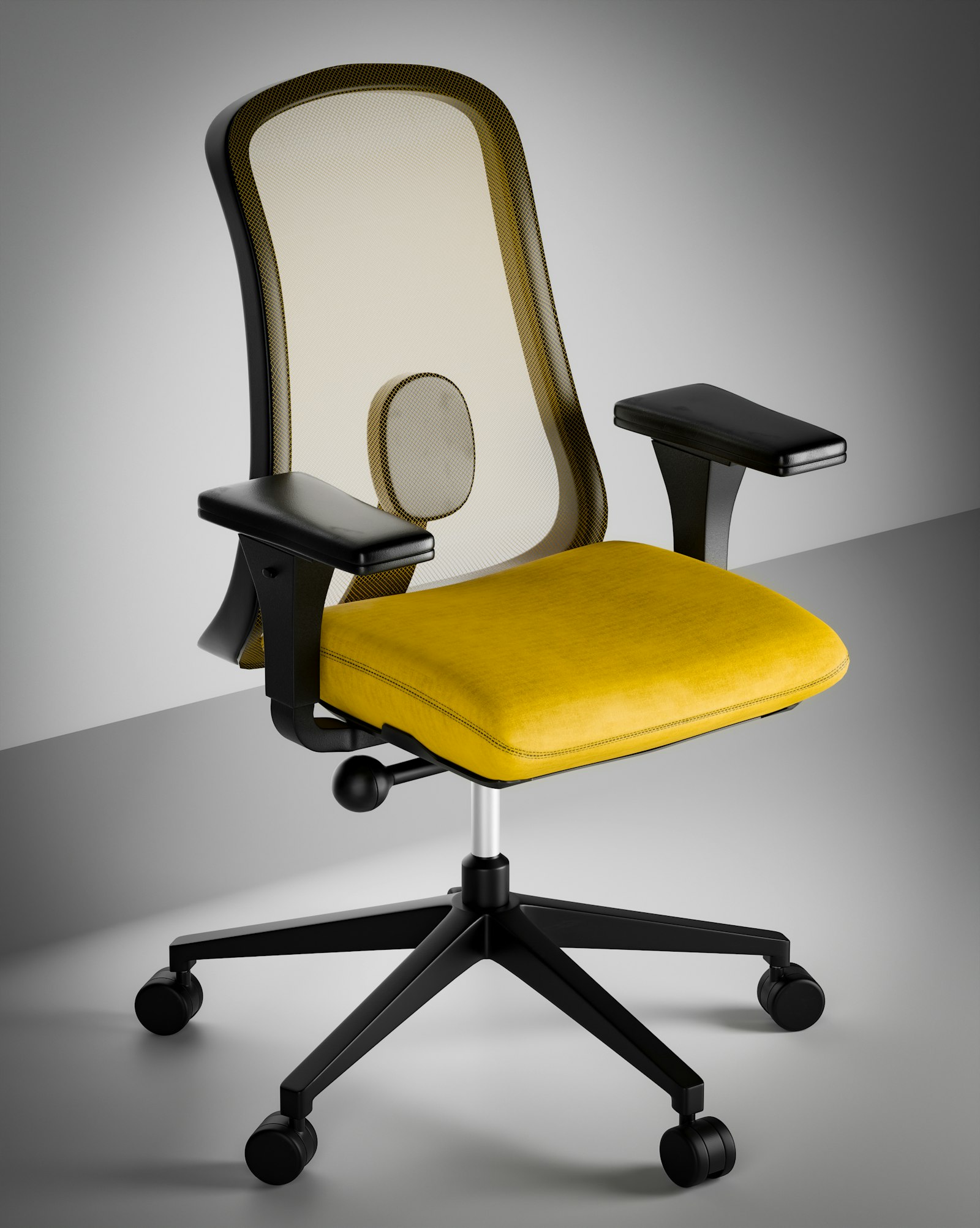
- Choose a firm seat. Deep, soft seats such as sofas and some gaming chairs let you sink and slump, and they are hard to get out of. A firmer seat that you sit on rather than in is often easier, as one poster looking for a firm, supportive chair they won't sink into describes.
- Raise the seat a little. Try the seat high enough that your hips are level with or slightly above your knees, with your feet flat or on a footrest.
- Support your lower back without forcing an arch. Adjust the lumbar support or use a small cushion so it feels supportive, not pushing. Our lumbar support guide covers height and depth.
- Try a slight recline. Some people find leaning back against the backrest easier than sitting bolt upright. Loosen the recline tension so the backrest moves with you, as explained in our recline and tilt guide.
- Use the armrests to stand up. Pushing up through your arms reduces the effort of getting out of the chair, which matters when you stand up many times a day.
Whatever you choose, bring the keyboard, mouse and screen close so you are not leaning forward to reach them.
Alternate between sitting, standing and walking
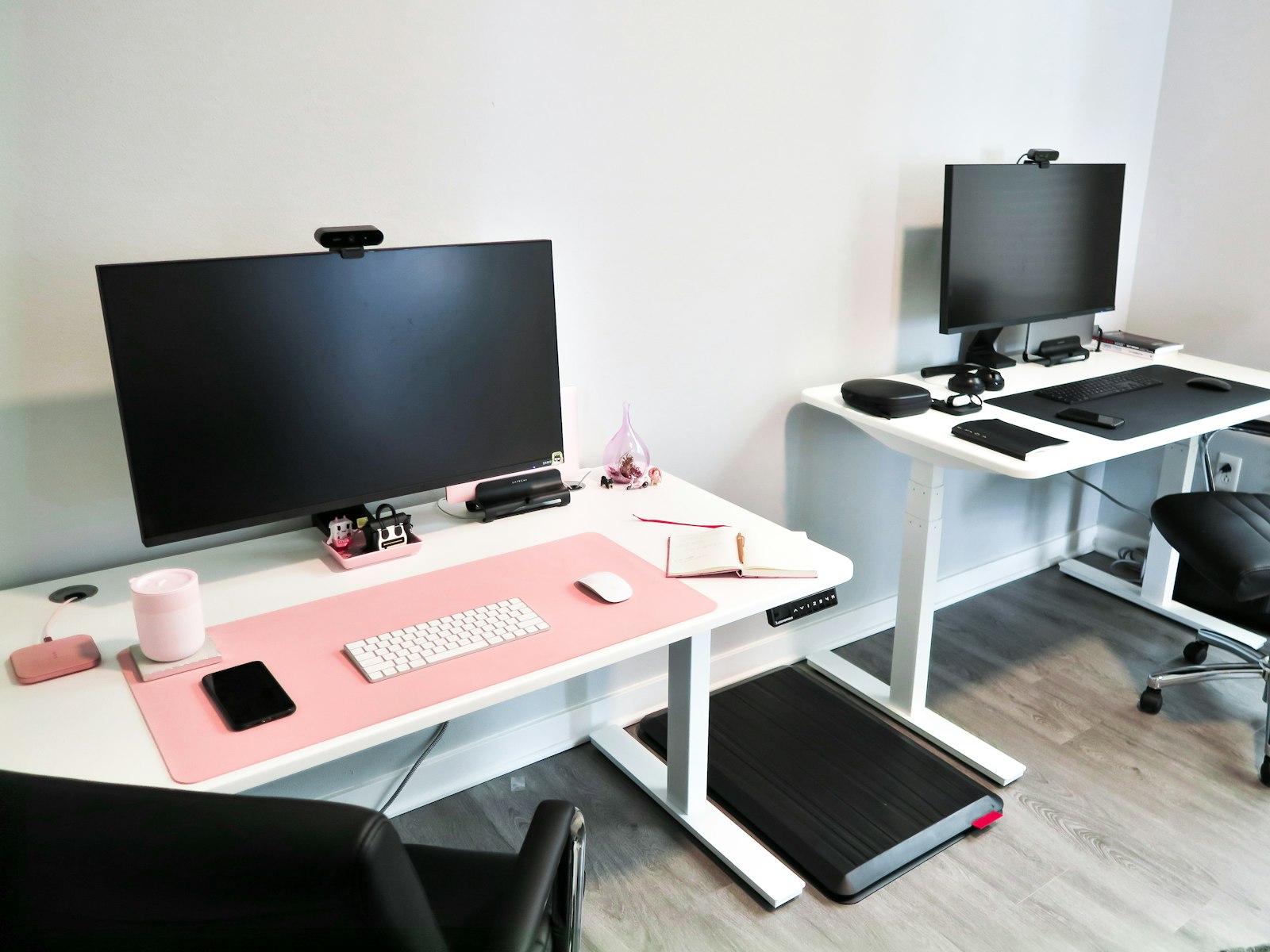
If standing is easier than sitting, a sit-stand desk or a standing desk converter lets you switch without stopping work. Switching is the point; standing all day causes its own aches, as the first poster above found. Our guides to sit-stand desk height and standing desk back pain explain how to set both positions up properly.
Use calls as walking time when you can, and keep tasks that need focus for the times when you are most comfortable.
Braces, work and getting support
Back braces are not recommended for managing back pain. The UK National Institute for Health and Care Excellence guideline (NICE NG59) says not to offer belts or corsets for low back pain with or without sciatica, and MedlinePlus warns that using braces too much can weaken the muscles that support your spine.
The same NICE guideline encourages helping people return to work and normal activities. If your job is mostly sitting, talk to your manager or occupational health team about temporary changes: a sit-stand desk, more frequent breaks, walking meetings or a gradual return to full hours. Our guide to returning to desk work after a flare includes a phased plan you can take to that conversation.
When to get more help
See a GP or doctor if painkillers are not helping, the pain is not improving after a few weeks or is getting worse, or it stops you doing your normal activities, as the NHS advises. Also get checked if you have back pain with a fever, unexplained weight loss, swelling in your back, or pain that is worse at night. Physiotherapy is a common next step, and in some areas of the UK you can refer yourself to NHS musculoskeletal services without a GP referral.
If your pain runs down one leg, our guide to sciatica at a desk job covers more of the leg symptoms. The NHS says surgery is not usually needed, but a doctor may refer you to discuss it if other treatments have not helped or if muscle weakness or numbness is getting worse.