By Posture Reminder AI
Published by Posture Reminder AI
Lumbar Support for Office Chairs: Placement, Pressure, and When to Remove It
Lumbar support is supposed to make sitting easier, yet many people add a pillow or buy an ergonomic chair and feel worse. The lower back feels pushed, the hips slide forward, the ribs flare, or the chair suddenly feels too upright.
Quick summary
Summarize this blog with AI
Lumbar support is supposed to make sitting easier, yet many people add a pillow or buy an ergonomic chair and feel worse. The lower back feels pushed, the hips slide forward, the ribs flare, or the chair suddenly feels too upright.
That does not mean lumbar support is useless. It usually means the support is in the wrong place, too aggressive for the chair, or fighting a workstation mismatch. A thick cushion can turn a reasonable backrest into a shape your body has to brace against all day.
Good lumbar support is subtle. It fills the natural low-back curve while letting the pelvis, ribs, shoulders, and head settle. If you have to fight the support, it is no longer support. It is pressure.
Key Highlights
- Lumbar support should meet the natural low-back curve, usually near belt-line height.
- Bigger is not better; thick external cushions often create too much arch or pressure.
- Seat depth, recline, foot support, and desk height can make lumbar support feel right or wrong.
- Sharp, radiating, or worsening pain is not normal adjustment discomfort.
What to Do Today
- Remove extra back pillows first and test the chair as designed for one work block.
- Sit all the way back, then place the support at the low-back curve near the belt line.
- Use the least aggressive setting that still gives steady contact.
- Try a small rolled towel before buying a large external lumbar pillow.
- After any cushion change, recheck chair height, foot support, armrests, monitor distance, and keyboard height.
Where lumbar support should sit
For most people, the center of the support should land around the small of the back, not at the shoulder blades and not down at the tailbone. In the right position, you feel contact without needing to arch hard, tuck under, or slide forward.
Sit back with both feet supported and your ribs relaxed. If the support gently fills the low-back curve, you are close. If it lifts your chest, pushes your shoulders forward, or makes your neck tense within minutes, it is probably too high, too thick, or paired with a poor seat position.
Why a lumbar pillow can make pain worse
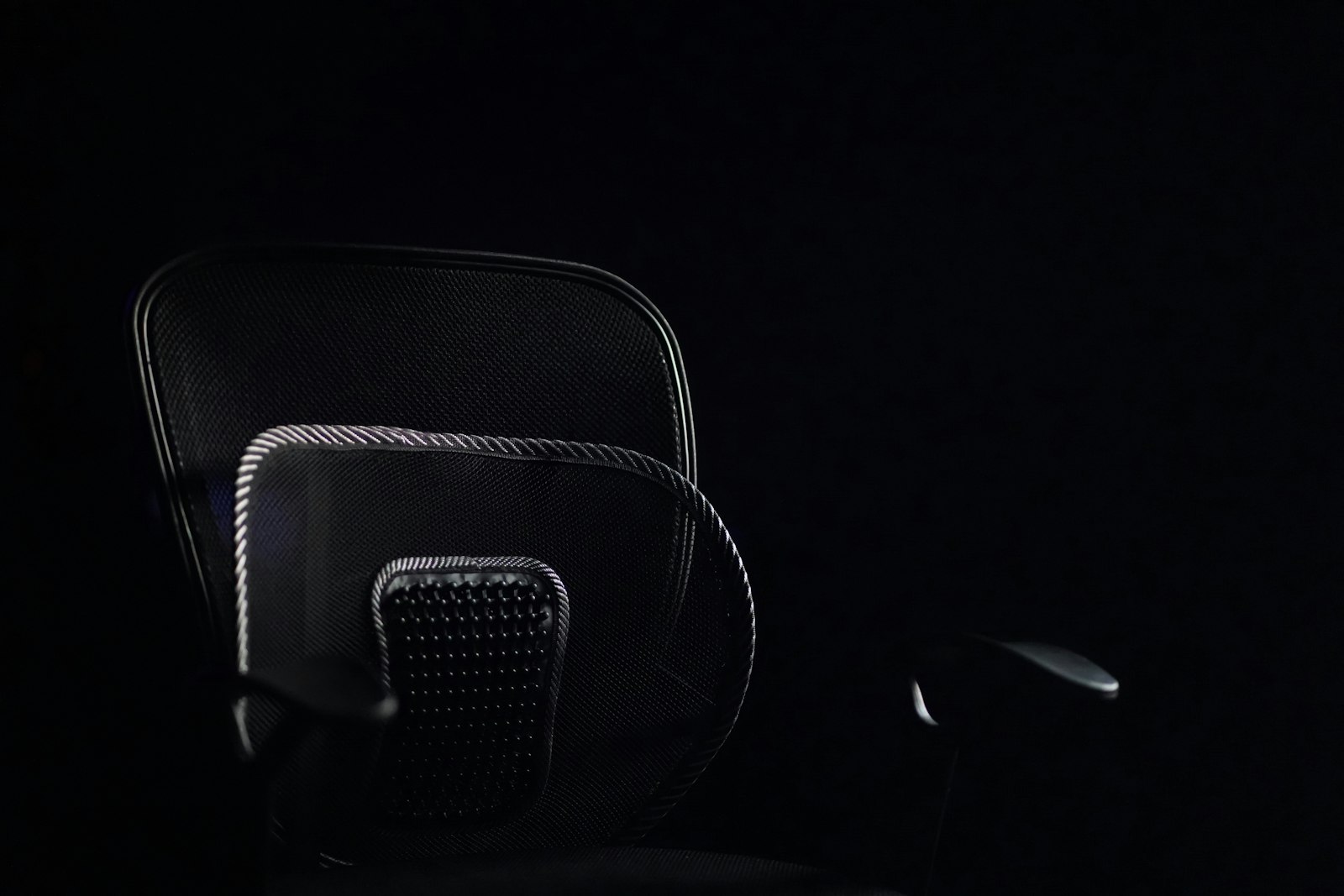
External lumbar pillows are generic. Your spine, pelvis, chair back, seat depth, and desk height are not. A cushion that helps on a dining chair may be excessive on a chair that already has built-in contour.
The most common mistake is stacking support on top of support. A curved office chair plus a thick pillow can push the pelvis forward, increase low-back extension, and make the abdomen brace. The person then tries to sit straighter, but the chair is already forcing too much shape.
- Too low: pressure near the sacrum or tailbone, awkward pelvic roll.
- Too high: lower ribs or upper back pushed forward, neck tension.
- Too thick: exaggerated arch, forward sliding, abdominal bracing.
- Too soft: collapse without useful support or a clear reference point.
Check the whole chair before blaming your back
Lumbar support only works when the rest of the chair lets you use it. Seat depth should let you sit back without pressure behind the knees. Feet should rest on the floor or a footrest. Armrests should support the forearms without a shrug. Recline should allow the backrest to carry some load.
A desk that is too high can pull the whole setup apart. You raise the chair to reach the keyboard, lose foot support, slide forward, and then never touch the lumbar area. A monitor that is too far away can do the same thing by pulling your torso off the backrest.
A five-minute adjustment sequence
Remove added back pillows and seat cushions. Sit back fully. Place your feet on the floor or a footrest. Set chair height so the keyboard and mouse can be used with relaxed shoulders. Bring the monitor close enough that you can read without leaning.
Now adjust lumbar support. Move it to the low-back curve, reduce firmness, and sit for five minutes. If your chair has no useful adjustment, roll a small towel two to three inches thick and place it near the belt line. If the towel feels better than a commercial pillow, the pillow was likely too large or too aggressive.
When to use less support
Use less support when the chair already has a strong curve, when the support makes you arch, when your ribs flare upward, or when your neck becomes tense shortly after sitting. Some people do better with a flatter backrest plus more movement than with a chair that forces one upright shape.
Less support is not the same as collapsing. It means the backrest helps you stay near neutral without pinning you there. The best chair position is one you can leave and return to, not a brace that holds you still for eight hours.
When to use more support
More support can help when the chair back is flat, the seat is deep, or you cannot sit back without slumping. It can also help when you are temporarily working from a dining chair or guest chair. In those cases, a small towel roll is often the safest first test because it is adjustable and cheap.
Add support gradually and test one change at a time for a real work block. A new support can feel different, but it should not create sharp pain, radiating symptoms, numbness, or a feeling that you must brace to tolerate the chair.
Warning signs that the chair is not the full answer
If pain travels down the leg, numbness or weakness appears, symptoms worsen quickly, or sitting becomes intolerable even after careful setup changes, get medical help. A chair can reduce irritation, but it cannot diagnose disc, nerve, hip, or inflammatory problems.
Be skeptical of any chair that promises to fix back pain by itself. Low-back comfort usually depends on fit, movement variety, walking, strength, sleep, stress, and sometimes clinical care. Lumbar support is one lever, not the whole solution.
Frequently Asked Questions
Should lumbar support feel uncomfortable at first?
It can feel different, but it should not feel forceful or painful. Mild awareness is normal. Sharp pain, radiating symptoms, or growing tension means the height, pressure, or chair fit needs to change.
Is a rolled towel better than a lumbar pillow?
Often it is a better first test because you can control thickness and height. If a small towel works and a large pillow does not, the pillow is probably too aggressive for your body or chair.
Can a seat cushion change lumbar support?
Yes. A seat cushion raises your pelvis relative to the backrest and can move the lumbar contact point. After adding a cushion, recheck chair height, foot support, armrests, and backrest position.
Medical Disclaimer
This article is for educational purposes only and is not medical advice. It is not intended to diagnose, treat, cure, or prevent any condition, and it does not replace care from a physician, physical therapist, or other qualified clinician. If you have severe pain, numbness, weakness, dizziness, symptoms that travel into an arm or leg, worsening symptoms, recent trauma, a rapidly changing body shape, or questions about your specific situation, seek professional medical evaluation.