By Posture Reminder AI
Published by Posture Reminder AI
Dry Eyes at the Computer? Desk Fixes for Winter Air and Screen Days
If your eyes feel gritty, hot or tired by mid-afternoon, and it gets worse once the heating comes on, you are far from alone. In r/Dryeyes, desk workers ask whether laptop days are why their eyes feel gritty by late afternoon , whether a different monitor would help , whether years of screen use caused their dry eye , and how to find a desk humidifier for a dry open-plan office .
Quick summary
Summarize this blog with AI
If your eyes feel gritty, hot or tired by mid-afternoon, and it gets worse once the heating comes on, you are far from alone. In r/Dryeyes, desk workers ask whether laptop days are why their eyes feel gritty by late afternoon, whether a different monitor would help, whether years of screen use caused their dry eye, and how to find a desk humidifier for a dry open-plan office.
This guide explains why screens and winter air combine to dry your eyes, what you can change at your desk, and when to see an eye professional. It is general information, not a diagnosis.
Why screen work dries your eyes
Your eyes stay comfortable because a thin tear film covers their surface, and blinking spreads it. Concentration reduces blinking. The American Academy of Ophthalmology (AAO) says people normally blink about 15 times a minute, but studies show only about 5 to 7 blinks a minute while using computers and other screens. University of Utah Health (2026) adds that many of the blinks people do make at a screen are incomplete, so the lids do not fully close.
That is why the feeling many people call eye strain is often dry eye. A Yale Medicine ophthalmologist (Yale Medicine, 2026) explains that dry eye can feel like pressure around the eyes or forehead, burning, itching, light sensitivity or blurred vision that comes and goes. The good news, according to the AAO, is that screens do not permanently damage your eyes.
Why it gets worse in winter
Cold outdoor air and indoor heating both dry the air, so tears evaporate faster. Yale Medicine names dry air from cold weather, wind or indoor heating as a common cause, alongside blinking less at a screen. The NHS dry eyes page also lists looking at computer screens for a long time without a break and spending time in air-conditioned or heated environments among the things that make dry eyes more likely.
Other risk factors are outside your control. The National Eye Institute (NEI) lists being 50 or older, being female, wearing contact lenses and certain autoimmune conditions, while the NHS adds some medicines and conditions such as blepharitis. If several apply to you, desk changes may help but may not be enough on their own.
Fix the air around your desk
- Move out of the airflow. A heater vent, desk fan or air-conditioning outlet blowing across your face dries your eyes quickly. Turn the vent away or move the desk. NEI suggests avoiding smoke, wind and air conditioning where you can.
- Add humidity. The AAO, NHS and NEI all suggest a humidifier for dry indoor air. Clean and refill it as the maker instructs.
- Drink enough fluids. Yale Medicine includes not drinking enough fluids among the causes of dry eye.
Winter desks cause other problems too. If your hands are cold as well as your eyes being dry, our guide to cold hands at a desk covers warming the room and your body without sitting next to a fan heater.
Adjust your screen position and lighting
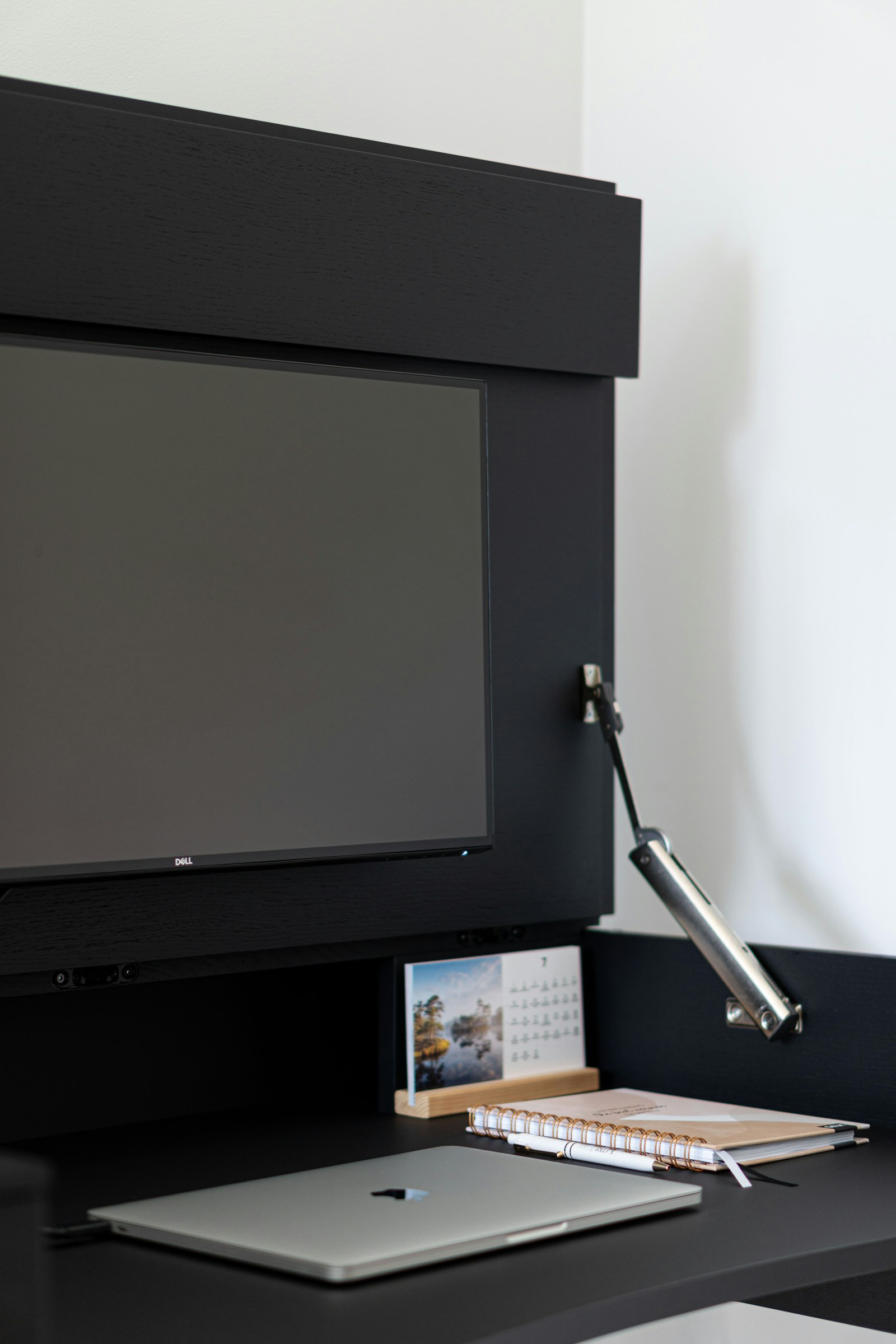
Where you look matters. The AAO advises sitting about 25 inches (roughly an arm's length) from the screen and positioning it so that your gaze is slightly downward, not straight ahead or up. The NHS similarly recommends having your computer screen just below eye level. If your screen sits high, for example on a tall stand or stacked above another monitor, lowering it is one of the simplest changes to try.
Do not lower the screen so far that you bend your neck to read it. A comfortable setup usually has the top of the screen at or slightly below eye level, and the whole screen within a small downward glance. Our monitor distance guide helps you find the balance, and if you wear varifocals, see our guide to progressive lenses at the computer.
Lighting matters too. The AAO recommends matching screen brightness to the room and reducing glare. Our desk lighting guide covers lamps, windows and glare.
Build blinking and eye breaks into your day
Yale Medicine and University of Utah Health both recommend the 20-20-20 rule: every 20 minutes, look at something about 20 feet away for at least 20 seconds. Use the break to blink fully a few times or close your eyes completely for a moment. The AAO suggests even a sticky note on the screen as a reminder to blink.
Breaks are easy to forget when you are focused, which is exactly when you blink least. A scheduled reminder works better than willpower. Our microbreak guide shows how to pair eye breaks with short movement breaks, so you rest your eyes, neck and back together.
Blue light glasses are unlikely to solve dry eye. Yale Medicine notes that, according to the AAO, there is little evidence that they prevent eye strain, and that much of the relief people report is related to dry eye instead.
Eye drops and contact lenses
Artificial tears are the usual first treatment for mild dry eye, and you can buy them without a prescription. Yale Medicine says drops with preservatives can generally be used up to four times a day, and recommends preservative-free drops if you need them more often. Gel drops last longer but can blur your vision for around 20 minutes, so you may prefer them at lunch or at the end of the day.
The NHS also recommends cleaning your eyelids every day with a warm (not hot) compress and a gentle massage, which helps the oil glands along the lid edges. If you wear contact lenses, the AAO and NHS both suggest switching to glasses for part of the day to rest your eyes. A pharmacist can help you choose between drops, gels and ointments.
When to see an optician or doctor
See an optician, optometrist or GP if your eyes are still dry after a few weeks of these changes, or if you notice a change in the shape of your eyelids. Yale Medicine also advises an eye exam for ongoing changes in vision or frequent headaches, since an out-of-date prescription can cause strain. Our guide to computer headaches explains how eye, neck and migraine causes can overlap.
Get urgent help if you have a painful red eye, a red eye while wearing contact lenses, sudden changes in vision such as flashes, wavy lines or vision loss, pain when looking at light, or a red eye with a severe headache and nausea. The NHS and Yale Medicine both note that these symptoms need prompt attention and are not typical of screen-related dry eye.