By Leon Wei
Dead Butt Syndrome From Desk Work: Glute Activation Without Overcorrecting
People use the phrase dead butt syndrome for a few different desk-related problems: glutes that feel asleep, hips that feel locked after sitting, low-back ache that improves when walking, or a sense that the butt muscles are not contributing during squats, stairs, or running. The phrase is casual, but the pattern is common enough to take seriously.
Quick summary
Summarize this blog with AI
People use the phrase dead butt syndrome for a few different desk-related problems: glutes that feel asleep, hips that feel locked after sitting, low-back ache that improves when walking, or a sense that the butt muscles are not contributing during squats, stairs, or running. The phrase is casual, but the pattern is common enough to take seriously.
Long sitting does not permanently turn off your glutes. Muscles do not forget how to work because you used a chair. What can happen is more practical: the hips spend hours flexed, the glutes spend hours unloaded, and the back, hip flexors, hamstrings, or deep rotators start doing more than their share when you finally stand up and move.
The fix is not to clench your butt all day or chase one magic stretch. A better plan is to interrupt long sitting, restore hip motion, strengthen the glutes in positions you can control, and adjust the desk so you are not compressing the same tissues for hours at a time.
Key Highlights
- Dead butt syndrome is a common nickname, not a precise diagnosis.
- Desk workers usually need more position changes, hip mobility, and glute strength rather than constant glute squeezing.
- Butt numbness, tingling, or pain down the leg can involve nerve irritation and deserves more caution than ordinary stiffness.
- The best plan combines workday movement with simple strength work two to three times per week.
What to Do Today
- Stand up before your hips feel stuck, ideally every 30 to 45 minutes.
- Walk for one minute or do ten slow sit-to-stands after long sitting blocks.
- Check seat depth so the chair is not pressing hard into the back of the thighs.
- Use two sets of glute bridges and side-lying hip abductions as a low-dose reset.
- Stop forcing a hard arch or constant glute squeeze while sitting.
What People Mean by Dead Butt Syndrome
The term often points to gluteal amnesia, but in everyday use it covers several sensations. Some people mean weakness or poor muscle activation. Others mean a deep ache in the butt after sitting. Others mean numbness, tingling, or sciatic-like symptoms. Those are not all the same problem.
If the issue is stiffness and poor control, desk changes and exercise can help. If the issue is true numbness, spreading tingling, or symptoms that travel below the knee, treat it more carefully. Nerves can be irritated by pressure, spinal issues, or sustained positions, and that deserves medical assessment if it persists or worsens.
For most desk workers, the useful starting point is simple: after long sitting, can you extend the hip, walk, climb stairs, and hinge without the lower back doing all the work? If not, the glutes and hips need a better daily input pattern.
Why Desk Work Makes the Glutes Feel Unavailable
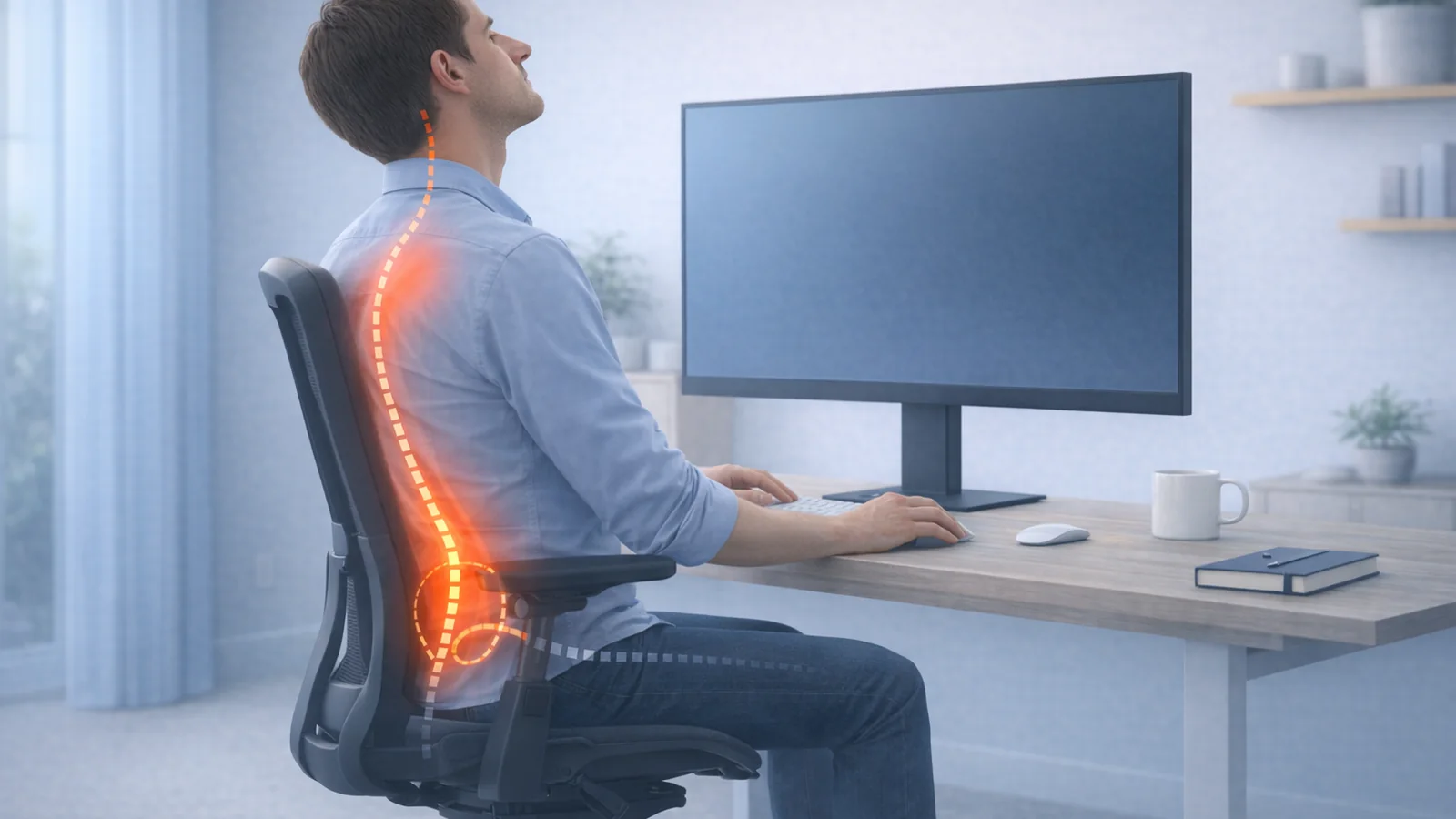
Sitting puts the hips in flexion. That is not dangerous by itself. The problem is the duration. If the hips stay flexed for hours, the front of the hips can feel short and the glutes can spend the day in a lengthened, low-demand position. When you stand up, the body may choose the easiest available strategy: arch the lower back, grip the hamstrings, or shift into one hip.
Chair pressure can add another layer. A seat pan that is too deep can press behind the knees or into the upper hamstrings. A hard front edge can increase local pressure. A chair that is too high can leave the feet unsupported, which changes pelvic position and makes the hips feel guarded.
None of this means you need an exotic chair. It means the basic fit matters: feet supported, seat depth appropriate, hips slightly open, back supported, and enough breaks that the chair is not the only position your body knows all day.
Quick Self-Checks Before You Start Exercising
Try a slow sit-to-stand without using your hands. Do you feel the effort in the hips and thighs, or mostly in the low back? Next, stand on one leg for 15 seconds. Does the pelvis drop, the foot collapse, or the hip cramp? Finally, do a glute bridge and ask whether the glutes work without the hamstrings cramping immediately.
These checks are not diagnostic tests. They simply show where control is limited. If every drill causes sharp pain, nerve symptoms, or back spasm, stop and get help. If the checks feel awkward but safe, start with easier versions and build gradually.
Also check timing. Symptoms that appear after two hours of sitting are often easier to manage than symptoms that appear immediately. If your threshold is two hours, change position at 45 minutes. If your threshold is 30 minutes, change at 15. Prevention beats recovery.
Desk Changes That Help the Hips and Glutes
Set the chair height so your feet can rest fully on the floor or on a footrest. If your feet dangle, the thighs carry more pressure and the pelvis may tuck under. Adjust seat depth so you can sit back against the backrest with a small gap behind the knees. If the seat is too deep, add a cushion behind your back or consider a chair with depth adjustment.
Use the backrest. Many people perch at the front of the chair while trying to sit actively, then wonder why the hips fatigue. Supported sitting is allowed. A slight recline can reduce constant hip flexor tension and make the pelvis easier to position.
Change the position before the sensation builds. Crossed legs, one-foot-under sitting, and perching are not automatically bad, but they become problems when they are the only positions you use for long stretches. Rotate positions intentionally instead of waiting for discomfort to force the change.
A Low-Dose Glute Reset for Desk Workers
Use this reset once during the workday or after work. Start with five slow breaths while lying on your back, knees bent, feet flat. Let the ribs settle and avoid arching the low back. Then do two sets of eight glute bridges, pausing for one second at the top. You should feel the glutes, not a cramp in the hamstrings.
Next, do side-lying hip abductions or clamshells, two sets of eight per side. Keep the pelvis still and use a smaller range than you think you need. Finish with eight slow sit-to-stands from a chair, pushing evenly through both feet and standing tall without snapping the hips forward.
If that feels too easy after a week, add split squats, step-ups, or hip hinges. If it flares symptoms, reduce the range and volume. The right dose should leave the hips awake, not irritated.
A Four-Week Plan That Does Not Take Over Your Life
Week one is about interruption. Stand, walk, or reset every 30 to 45 minutes. Do the low-dose glute reset three times during the week. Week two keeps the breaks and adds one short strength session: bridges, side planks, rows, and split squats.
Weeks three and four progress carefully. Add loaded carries, Romanian deadlifts with light weight, or step-ups if they feel good. Keep the movement quality high. Your back should not become the prime mover because the exercise looks more advanced.
Track function rather than soreness. Good signs include easier standing after sitting, less hip stiffness on the first few steps, better stair climbing, and fewer episodes of butt or back ache during long workdays.
When Dead Butt Symptoms Need Medical Attention
Get evaluated if you have numbness that does not change with position, pain that travels below the knee, progressive weakness, foot drop, bowel or bladder changes, fever, unexplained weight loss, severe night pain, or symptoms after a fall or injury. These are not problems to solve with desk stretches alone.
Also get help if you have tried sensible movement and setup changes for several weeks without improvement. A clinician can check whether the driver is hip strength, nerve sensitivity, spinal irritation, tendon pain, or something else.
Frequently Asked Questions
Should I squeeze my glutes while sitting?
Not all day. A few intentional contractions can be fine, but constant squeezing can create more tension. It is usually better to stand, walk, and strengthen the glutes in actual movement patterns.
Is dead butt syndrome the same as sciatica?
No. The nickname can describe stiffness or poor glute control, while sciatica refers to nerve-related pain that can travel down the leg. If symptoms include numbness, tingling, weakness, or pain below the knee, be more cautious and consider professional evaluation.
Will a standing desk fix it?
A standing desk can help by reducing uninterrupted sitting, but only if you use it in short blocks and keep moving. Standing still all day can create a different static-posture problem.
How quickly should glute activation improve?
Some people feel better after a few days of movement breaks. Strength and tolerance usually take several weeks. If symptoms are worsening, spreading, or neurological, do not wait for a self-guided plan to fix it.
Medical Disclaimer
This article is for educational purposes only and is not medical advice. It is not intended to diagnose, treat, cure, or prevent any condition, and it does not replace care from a physician, physical therapist, or other qualified clinician. If you have severe pain, numbness, weakness, worsening symptoms, or questions about your specific situation, seek professional medical evaluation.


 Leon
Leon